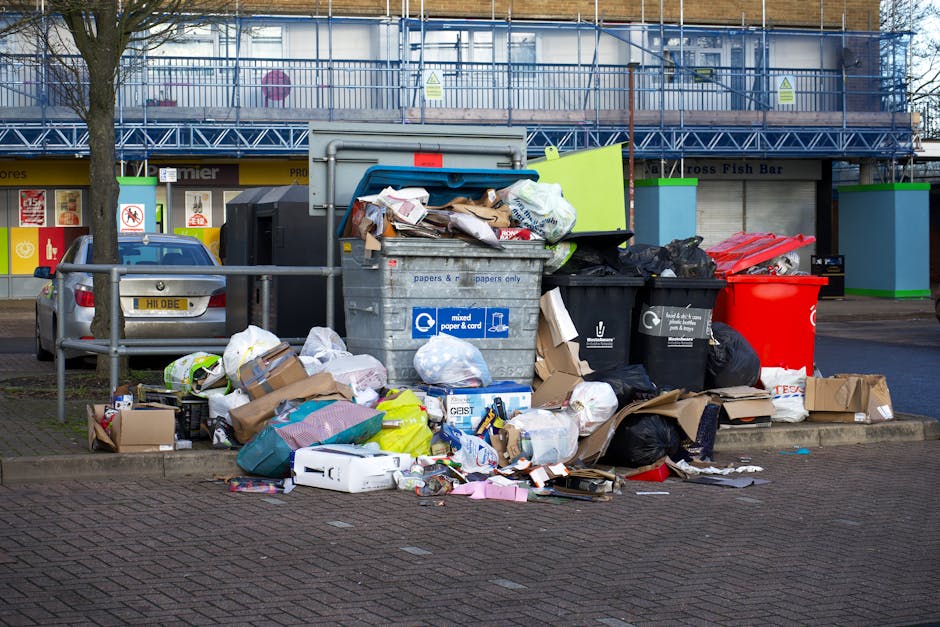
Bulky Waste in Putney: Skip, Collection or Recycle?
Bulky waste has a habit of arriving all at once. One week it is a bed frame leaning against the wall, next it is an old wardrobe, a broken sofa, a garden chair that has seen better days, and a box of odds and ends you swore you would sort out last summer. If you are dealing with Bulky Waste in Putney: Skip, Collection or Recycle?, the real question is not just what to remove, but how to remove it in the most practical way.
For many Putney households, landlords, office managers, and people in the middle of a move, the decision usually comes down to three routes: hire a skip, arrange a collection, or recycle what you can. Each has its place. The trick is choosing the option that fits your space, time, budget, and the type of items you are dealing with. This guide walks through the decision properly, without the fluff, so you can make a sensible choice and avoid a messy Saturday you will regret by tea time.
Table of Contents
- Why Bulky Waste in Putney: Skip, Collection or Recycle? Matters
- How Bulky Waste in Putney: Skip, Collection or Recycle? Works
- Key Benefits and Practical Advantages
- Who This Is For and When It Makes Sense
- Step-by-Step Guidance
- Expert Tips for Better Results
- Common Mistakes to Avoid
- Tools, Resources and Recommendations
- Law, Compliance, Standards, or Best Practice
- Options, Methods, or Comparison Table
- Case Study or Real-World Example
- Practical Checklist
- Conclusion
- Frequently Asked Questions
Why Bulky Waste in Putney: Skip, Collection or Recycle? Matters
Bulky waste is not the same as a bag of general rubbish. It is awkward by nature. It is heavy, often dirty, sometimes partly recyclable, and usually too large for normal bin collection. In a place like Putney, where many homes have limited outdoor space, narrow access, shared entrances, or parking that disappears the moment you need it, bulky waste can quickly become a headache.
The choice matters because the wrong method creates avoidable problems. A skip may seem simple until you realise you need permits, room on the road, and enough waste to justify it. A collection service may be more convenient, but not everything is suitable for the same pickup. Recycling is ideal where possible, but it only works if the item can actually be separated, sorted, and handled properly. Truth be told, most people do a bit of all three across different jobs.
There is also a time factor. A landlord clearing between tenancies may need speed. A family moving house may need flexibility. An office replacing old desks may need a clean, tidy, traceable process. If you wait too long, bulky items get in the way, make rooms feel smaller, and turn a clear-out into a half-finished project that sits there, staring at you.
That is why a practical decision framework helps. It keeps the job manageable and often saves money too.
If your bulky waste is part of a bigger move, services such as home moving support or house removal help can make the process much smoother, especially when furniture and awkward items need to be lifted, transported, and sorted quickly.
How Bulky Waste in Putney: Skip, Collection or Recycle? Works
At a practical level, the three main options work like this:
- Skip hire gives you a container on-site, usually for a fixed period, so you can load items yourself as you clear them.
- Bulky waste collection means a team comes to pick up agreed items, often from your home, office, or kerbside location.
- Recycling means sorting items into reusable or recyclable parts so fewer materials end up as residual waste.
The right choice depends on volume, access, urgency, and how much effort you want to spend lifting, sorting, and transporting. A single sofa or bed base usually does not need a skip. A full house clearance of furniture, mixed junk, and renovation leftovers may well do. Somewhere in the middle, a van-based collection is often the neatest answer.
One helpful way to think about it is this: if you are clearing a room and can stack items safely outside, collection may be enough. If you are clearing multiple rooms or a garage full of mixed waste, skip hire may be more efficient. If most of the load includes usable furniture, metal, wood, or parts that can be separated, recycling should be built into the plan from the beginning.
And yes, there are the awkward items. Old mattresses, broken wardrobes, heavy cabinets, office chairs with metal frames, exercise bikes, fridges, and odd bits of flat-pack furniture that seem to multiply overnight. These need a bit more judgement than just tossing them away. Not glamorous. But necessary.
Key Benefits and Practical Advantages
Choosing the right bulky waste route brings several real-world benefits. None of them are dramatic on paper, but in daily life they matter a lot.
- Less disruption: A planned collection or suitable skip keeps clutter under control.
- Better use of space: In Putney homes, freeing up a hallway, spare room, or garden area can make a big difference.
- Cleaner sorting: Recycling early avoids mixing useful materials with landfill-bound waste.
- Safer handling: Bulky items can be heavy and awkward. Proper removal reduces the risk of scratches, trips, and strained backs.
- More predictable timing: A scheduled approach helps when you are juggling a move, refurbishment, or tenancy deadline.
- Less waste guilt: Reuse and recycling are easier to do when the job is organised sensibly from the start.
There is also a small but important psychological benefit. A room that is half-filled with broken furniture can make the whole property feel stalled. Once the bulky waste is out, the space breathes again. You notice the light, the floor, even the smell of fresh air through an open window. Sounds a bit sentimental, perhaps, but anyone who has cleared a room knows exactly what that feels like.
For bigger residential clear-outs, using a service aligned with man and van support or man with van transport can be more practical than organising a larger waste container, particularly when the job includes tight stairs or on-street access.
Who This Is For and When It Makes Sense
Bulky waste decisions are not just for homeowners with old furniture. In practice, the need shows up in all sorts of situations.
- Homeowners: dealing with old beds, wardrobes, sofas, dining sets, and garden furniture.
- Renters: clearing out damaged items before a move-out inspection or after a long tenancy.
- Landlords and letting agents: removing items left behind between occupancies.
- Office managers: replacing desks, chairs, filing cabinets, or broken reception furniture.
- Small businesses: clearing stockroom clutter, packaging waste, or old fixtures.
- Families moving house: deciding what to keep, donate, recycle, or remove before moving day.
It makes sense to plan for bulky waste when the pile starts becoming a barrier. If you cannot safely walk through a room, if items are blocking access, or if moving them would take more than one pair of hands, it is probably time to act. A surprising number of people leave it until the last minute and then realise the sofa they planned to "deal with later" is now the only thing between them and a clean exit.
Commercial clear-outs are a little different. Businesses often need a tidier paper trail, quicker turnaround, and less interruption. In those cases, commercial moving support or office relocation services can help keep bulky waste removal tied to the move itself rather than treating it as a separate headache.
Step-by-Step Guidance
Here is the practical way to make the decision without overthinking it.
- List the items. Write down everything bulky: furniture, mattresses, appliances, metal items, garden pieces, and mixed rubbish.
- Separate what can be reused. Good-condition items may be suitable for resale, donation, or direct reuse. If something still has life in it, do not rush it into the waste pile.
- Check access. Ask yourself whether a vehicle can stop nearby, whether there are stairs, narrow corridors, or parking issues, and whether a skip would even fit safely.
- Estimate the volume. A few items usually suit collection. A roomful or houseful may justify a skip or a larger transport option.
- Consider weight and shape. Dense materials like timber, metal, and old appliances behave very differently from flattened cardboard or dismantled furniture.
- Decide on your priority. Is speed more important than cost? Is convenience more important than sorting everything yourself? Be honest here.
- Book the right option. Choose skip hire, collection, or recycling based on the actual load rather than the idea of the load.
- Prepare the items. Dismantle what you safely can, remove loose contents, tape sharp edges, and keep pathways clear.
A small tip that saves a lot of stress: take photos before you book anything. You do not need a gallery worthy of an art exhibition, just clear images of the items and the space. It helps you judge whether the job is straightforward or a bit more involved than first thought.
If the bulky waste sits alongside packing, a coordinated approach can be much easier. Packing and unpacking services often pair well with clear-outs because the sorting and the removal happen in the same rhythm, not in two separate frantic weekends.
Expert Tips for Better Results
After enough clear-outs, a few patterns become obvious. The jobs that go smoothly usually have one thing in common: the owner made decisions early.
- Sort before you lift. Do not move the same item three times if you can avoid it. Decide its fate first.
- Keep recyclable materials separate. Metal, untreated wood, and certain furniture components are often easier to divert if they are not tangled up with general waste.
- Break down furniture where safe. A dismantled wardrobe is easier to move than a fully assembled one. Obvious, yes, but it gets missed a lot.
- Protect floors and walls. Old sofas with rough feet and sharp edges can do sneaky damage during removal.
- Think about timing. Early morning collections or planned loading windows usually work better than trying to squeeze the task into a busy evening.
- Plan the route. From the room to the vehicle, there should be no obstacles, loose rugs, or surprise dog toys underfoot.
One slightly old-fashioned truth: a tape measure can be more useful than a guess. Measure the sofa, the wardrobe, the doorway, and the lift if there is one. You will save yourself that awkward moment where everybody stands in silence trying to persuade a sofa to fit through a door that clearly does not want it.
For heavier or larger loads, a dedicated moving truck or removal truck hire can be a better fit than a smaller collection setup, especially when bulky waste is only one part of a larger property clear-out.
Common Mistakes to Avoid
Most bulky waste problems come from a few familiar mistakes. They are easy to make, so no judgement, but it helps to spot them early.
- Leaving everything until the last day: This creates panic, poor decisions, and more lifting than necessary.
- Choosing skip hire for just one or two items: That is often more than you need, and not always the smartest spend.
- Assuming all items can be recycled together: Some need dismantling or separate handling.
- Ignoring access restrictions: A collection that cannot reach your property can become a delay fast.
- Mixing hazardous items with ordinary bulky waste: Things like certain chemicals, gas bottles, or electronic waste may need separate handling.
- Forgetting about neighbours or shared spaces: In apartment buildings, hallways and entrances need to stay clear and safe.
Another common one: overestimating how much you can do in a single afternoon. It always looks manageable until you are halfway through lifting a chest of drawers and someone says, "Why is this heavier than the sofa?" Fair question, honestly.
Small planning errors are fixable. Big access problems are harder. That is the bit worth remembering.
Tools, Resources and Recommendations
You do not need specialised equipment for every bulky waste job, but a few simple tools make a real difference.
- Work gloves: for grip and protection against splinters or sharp edges.
- Furniture sliders or a dolly: useful for moving heavy items without scraping floors.
- Strong tape and labels: handy when sorting parts, screws, or dismantled pieces.
- Basic tools: screwdrivers, Allen keys, and a hammer for dismantling furniture safely.
- Dust sheets: helpful if items have been stored in a loft, shed, or garage and are covered in dust.
- Measuring tape: good for checking access and vehicle fit.
From a service perspective, the most useful recommendation is to match the removal method to the job size. Smaller mixed clear-outs often suit van-based collection. Full property clearances, office reconfigurations, or multi-room furniture removal may need a broader moving service. For example, a property owner clearing out after a move might use furniture pick up support for reusable items and combine that with other transport for everything else.
If you are comparing your options, ask these three questions: What am I removing? How quickly do I need it gone? What is the easiest way to move it safely? Those three usually cut through the noise.
Law, Compliance, Standards, or Best Practice
With bulky waste, compliance is mostly about handling waste responsibly and avoiding unsafe disposal. In the UK, the broad principle is simple: waste should be managed properly, stored safely, and taken to the right destination by a legitimate operator. You do not need to become an expert overnight, but you do need to avoid the "someone will sort it later" approach. That is rarely a good idea.
For homeowners and tenants, best practice usually means:
- sorting items before removal where possible,
- keeping walkways and communal areas safe,
- separating items that need special handling,
- using a service that can clearly explain what happens to the waste,
- avoiding fly-tipping or leaving items where they block access.
For businesses, there is usually more emphasis on duty of care, documentation, and keeping the process tidy enough that staff and customers are not affected. A good rule of thumb is to treat bulky waste like any other operational task: plan it, record it if needed, and do not leave it to chance.
Standards are also about professionalism. That means polite arrival windows, sensible lifting practices, proper vehicles, and clear communication. It may sound basic, but basic is often what separates a smooth collection from a stressful one.
Options, Methods, or Comparison Table
Here is a straightforward comparison of the main options. It is not meant to be fancy, just useful.
| Option | Best for | Main advantage | Main limitation |
|---|---|---|---|
| Skip hire | Large clear-outs, mixed loads, ongoing disposal over a few days | You can load at your own pace | Needs space and may involve extra logistics |
| Bulky waste collection | Single items or smaller batches of furniture | Quick and convenient | Less flexible for very large volumes |
| Recycling / reuse | Items with salvage value or recyclable components | Reduces waste and can be the most responsible choice | Requires sorting and a bit of judgement |
In many real cases, the answer is not one option but a blend. A wardrobe might be dismantled and removed via collection, a metal bed frame might go into recycling, and the rest of the clear-out might suit a larger vehicle or truck. That mix is normal.
Case Study or Real-World Example
Imagine a Putney flat where a couple is preparing to move out on Friday afternoon. They have a sofa with one damaged arm, two bookcases, a mattress, an old desk chair, and a stack of tired storage boxes from the spare room. The hallway is narrow, the lift is small, and the street parking is limited after 10 a.m. Not unusual at all.
At first, they think a skip might solve everything. Then they realise there is no easy place to keep it, and the load is not large enough to justify the hassle. A full collection service feels better, but the sofa and bookcases still need dismantling, and some items could be reused. So they split the job: reusable pieces are separated first, the mattress and furniture are prepared for removal, and the rest is transported with a van-based solution. The result is calmer, cleaner, and honestly less exhausting.
The lesson is simple. The "best" option is rarely the one that sounds biggest or cheapest on first glance. It is the one that fits your space and your schedule. That is the bit people often miss when they are in a hurry.
Practical Checklist
Use this before you book anything or start carrying items downstairs.
- Identify all bulky items that need removing.
- Separate anything reusable, recyclable, or potentially valuable.
- Measure large items and check access points.
- Decide whether a skip, collection, or recycling route is best.
- Make sure pathways, stairs, and exits are clear.
- Gather gloves, tape, tools, and protective materials if needed.
- Confirm timing and parking or loading arrangements.
- Keep special items apart from general waste.
- Take photos of items if you need help estimating the load.
- Leave yourself a little buffer time. Things always take longer than you think.
That last point matters more than people expect. A half-hour buffer can turn a stressful scramble into a manageable job.
Get a free quote today and see how much you can save.
Conclusion
When you strip it back, Bulky Waste in Putney: Skip, Collection or Recycle? is really a question about fit. What are you removing? How much of it is there? Can it be reused or recycled? And how much time and effort do you realistically want to spend on the job?
A skip suits bigger, ongoing, or mixed clear-outs. A collection works well for smaller loads and faster turnarounds. Recycling should sit at the centre of the decision whenever items can be separated and diverted responsibly. The best answer is often a combination, chosen with a clear head rather than a tired one on a Saturday afternoon.
If you are clearing a home, office, or rental property in Putney, take the time to plan the route, sort the load, and choose the method that keeps the day simple. That little bit of thinking upfront saves a lot of lifting later. And once the bulky waste is gone, the room feels lighter. The whole place does, really.
Frequently Asked Questions
What counts as bulky waste in Putney?
Bulky waste usually means items too large or awkward for normal bin collections, such as sofas, mattresses, wardrobes, tables, office chairs, and similar household or commercial items.
Is skip hire better than a bulky waste collection?
It depends on the amount and type of waste. Skip hire is usually better for larger clear-outs or mixed loads, while collection is often more convenient for a few oversized items.
Can I recycle old furniture instead of throwing it away?
Often, yes. Many furniture items can be reused, dismantled for materials, or separated into recyclable parts. The condition of the item and the materials it contains matter a lot.
Do I need to dismantle bulky items before removal?
Not always, but dismantling can make items safer and easier to move. It is especially helpful for wardrobes, beds, shelving, and flat-pack furniture.
How do I know whether a skip is worth it?
If you have a lot of bulky items or an ongoing clear-out over several days, a skip may be worth considering. For one-off furniture removal, it can be overkill.
What should I do with items that are still in good condition?
Set them aside for reuse, donation, or resale where appropriate. It is usually better to give them a second life than to send them straight into the waste stream.
Are there bulky waste issues in flats and shared buildings?
Yes. Access, noise, corridor space, and lift use can all become issues in flats or shared blocks. Planning the removal route beforehand helps avoid trouble.
Can bulky waste be removed on the same day?
Sometimes, depending on availability and the size of the load. Smaller collections are more likely to be done quickly, but larger or more complex jobs usually need a little more planning.
What happens if I mix recyclable and non-recyclable items?
It can make sorting harder and may reduce how much can be recovered. Separating items ahead of time usually gives better results and keeps the process cleaner.
Is bulky waste removal suitable during a house move?
Absolutely. In fact, it is often the best time to deal with it. Moving day already brings enough stress, so clearing unwanted items beforehand makes the whole process smoother.
What if I have bulky waste and other moving tasks at the same time?
That is very common. Many people combine waste removal with moving support, packing help, or vehicle hire so they can deal with everything in one organised plan rather than separate jobs.
How can I make bulky waste removal less stressful?
Sort early, measure large items, clear access routes, and choose the right method for the load. A calm plan is usually more valuable than brute force. Honestly, a bit of order goes a long way.
If you are comparing moving and clearance options, you may also find services like about the team and contact us useful for understanding how the wider service works before you book anything.